Why Production Is Different
No test environment fully matches production. Real users introduce unexpected behavior, edge cases, and load patterns that staging never surfaces.
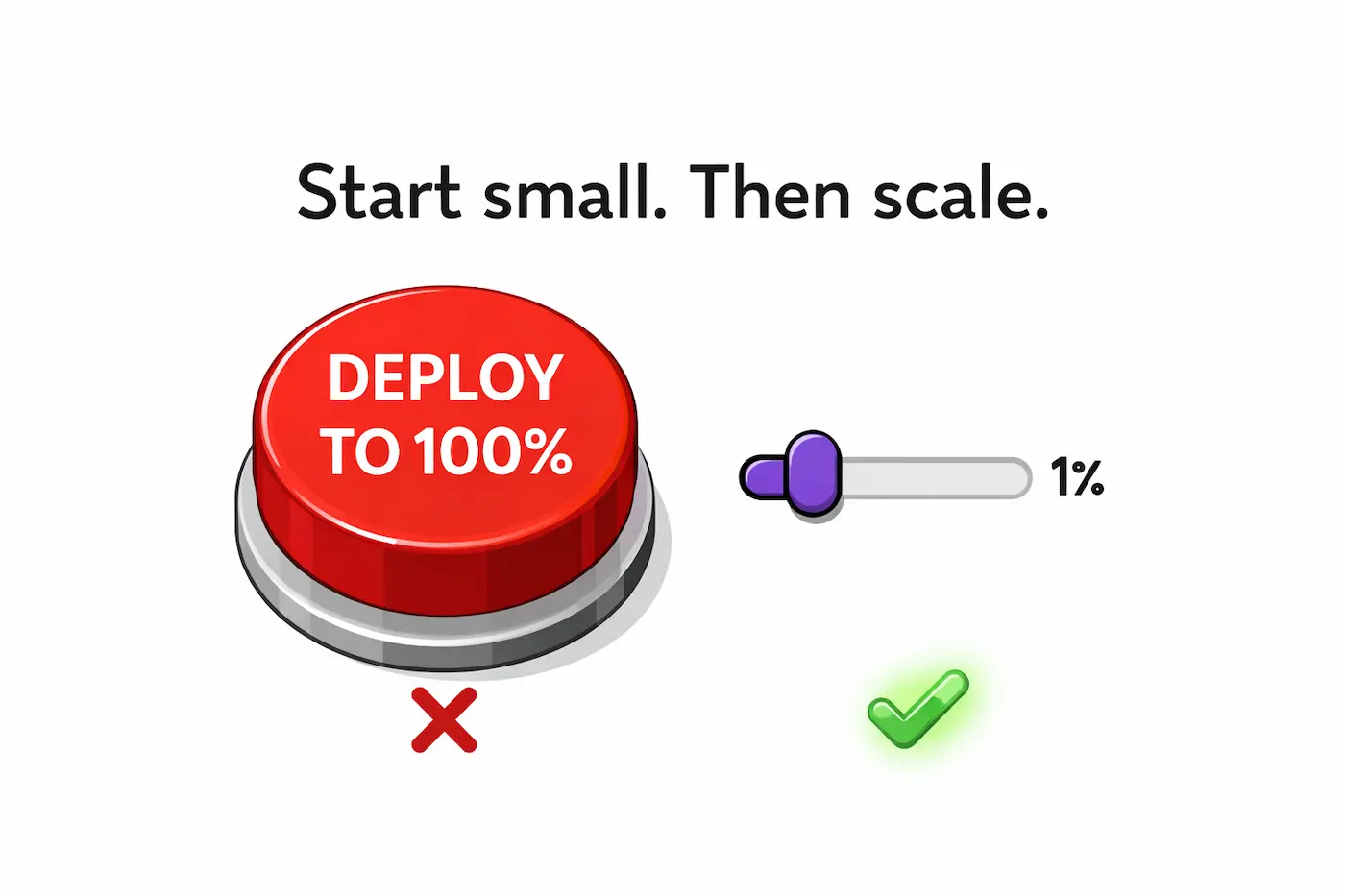
A gradual rollout doesn't prevent those surprises — it makes them smaller.
What Is Gradual Rollout?
Gradual rollout means releasing to a small percentage, observing system behavior, then expanding safely. The core idea:
Rollout Strategy
Gradual rollout stages
Internal / canary
Watch dashboards
Early validation
Watch dashboards
Limited exposure
Watch dashboards
Broad rollout
Watch dashboards
Full release
Watch dashboards
At each stage: wait 15–30 min, check error rate + latency p99. Flip off if anything regresses.
Risk Reduction
Full release
Gradual rollout
Observability Is Key
At every rollout stage you must track:
Real Example
A payment system is updated. Instead of enabling globally, the rollout starts at 1%. Issues are detected early, impact is contained, and the team has full visibility before expanding. If something regresses — flip the flag, instant rollback, no pipeline.
FAQ
What is a gradual rollout?
A strategy where features are released to a small percentage of users before full rollout.
Why not release to 100% immediately?
Because unknown issues will affect all users. A gradual rollout contains the blast radius.
Do gradual rollouts require feature flags?
Yes — feature flags are the mechanism that enables runtime control and percentage targeting.
Start Safer Releases
Release Anchor enables controlled rollouts with instant rollback. Ship to 1% first. You can always go to 100% — you can't undo a bad deploy that hit everyone.
Related topics