Why Flag Types Matter
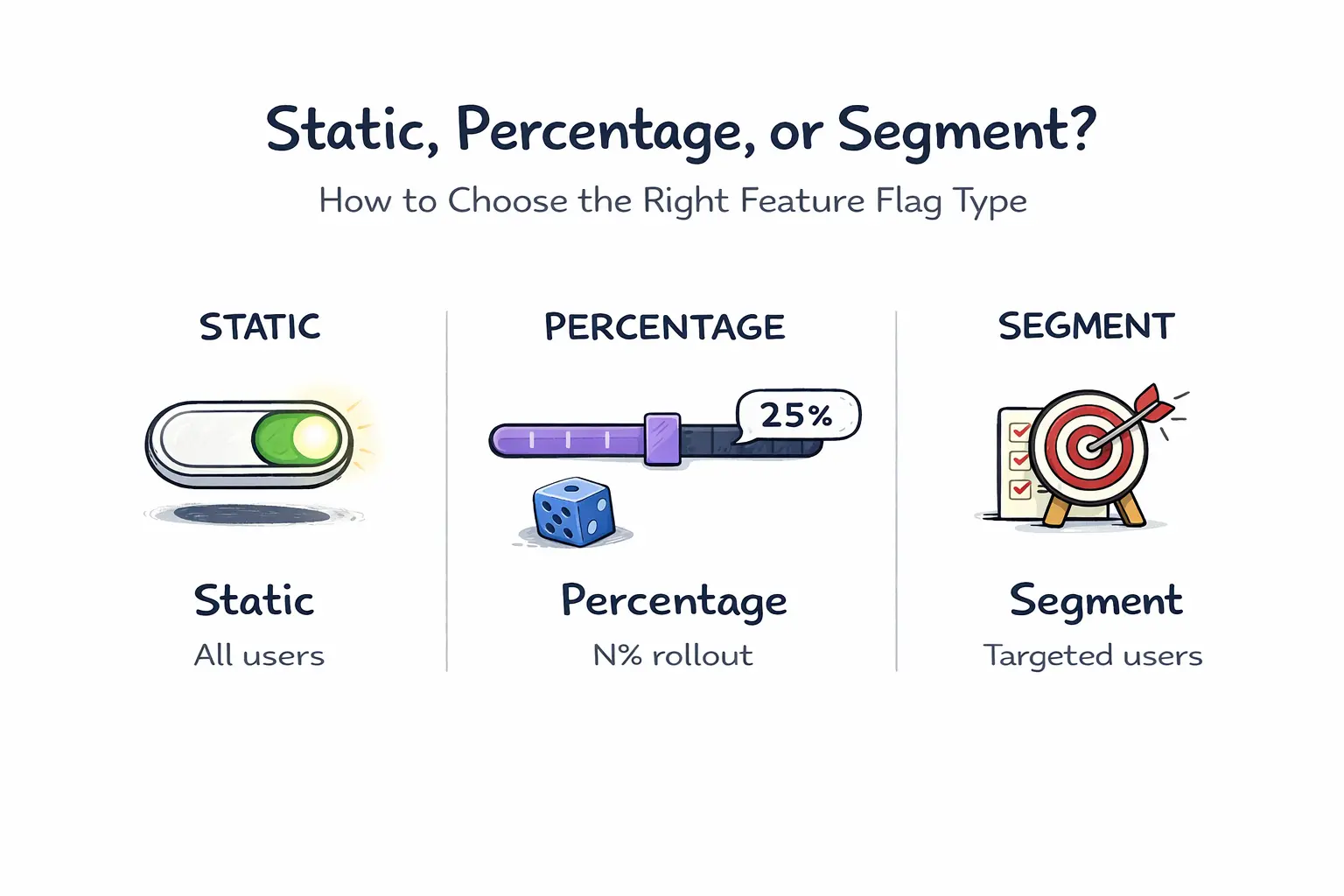
Not all feature flags solve the same problem. Choosing the right type determines rollout safety, targeting precision, and system behavior.
The Three Types
Use when: Kill switch, controlled launch, internal testing
"Enable for my account in production to verify before launch"
Use when: Canary releases, gradual rollouts, A/B testing
"5% → watch dashboards → 25% → 50% → 100%"
Use when: Plan-based access, beta groups, regional rollouts
"Enterprise plan users in the EU only"
When to Use Each
Real Example
A company launches a new payment provider. Here's how all three types come together:
Mental Model
Most production systems use all three together.
FAQ
What is the difference between static and percentage flags?
Static flags apply to all users. Percentage flags target a consistent subset, hashed per user ID.
When should I use segment-based flags?
When you need precise control based on user attributes — plan tier, country, beta group, or custom rules.
Can these be combined?
Yes — most real-world systems use static, percentage, and segment flags together.
Start Using the Right Strategy
Release Anchor supports all targeting modes — static flags, percentage rollouts, and segment targeting — with instant switching between strategies.
Related topics