What is a Feature Flag?
A feature flag is a runtime control mechanism that allows you to enable or disable features without redeploying your application. Instead of tying feature behavior to deployments, feature flags separate release from deploy.
Why Feature Flags Matter
Without feature flags
With feature flags
How Feature Flags Work
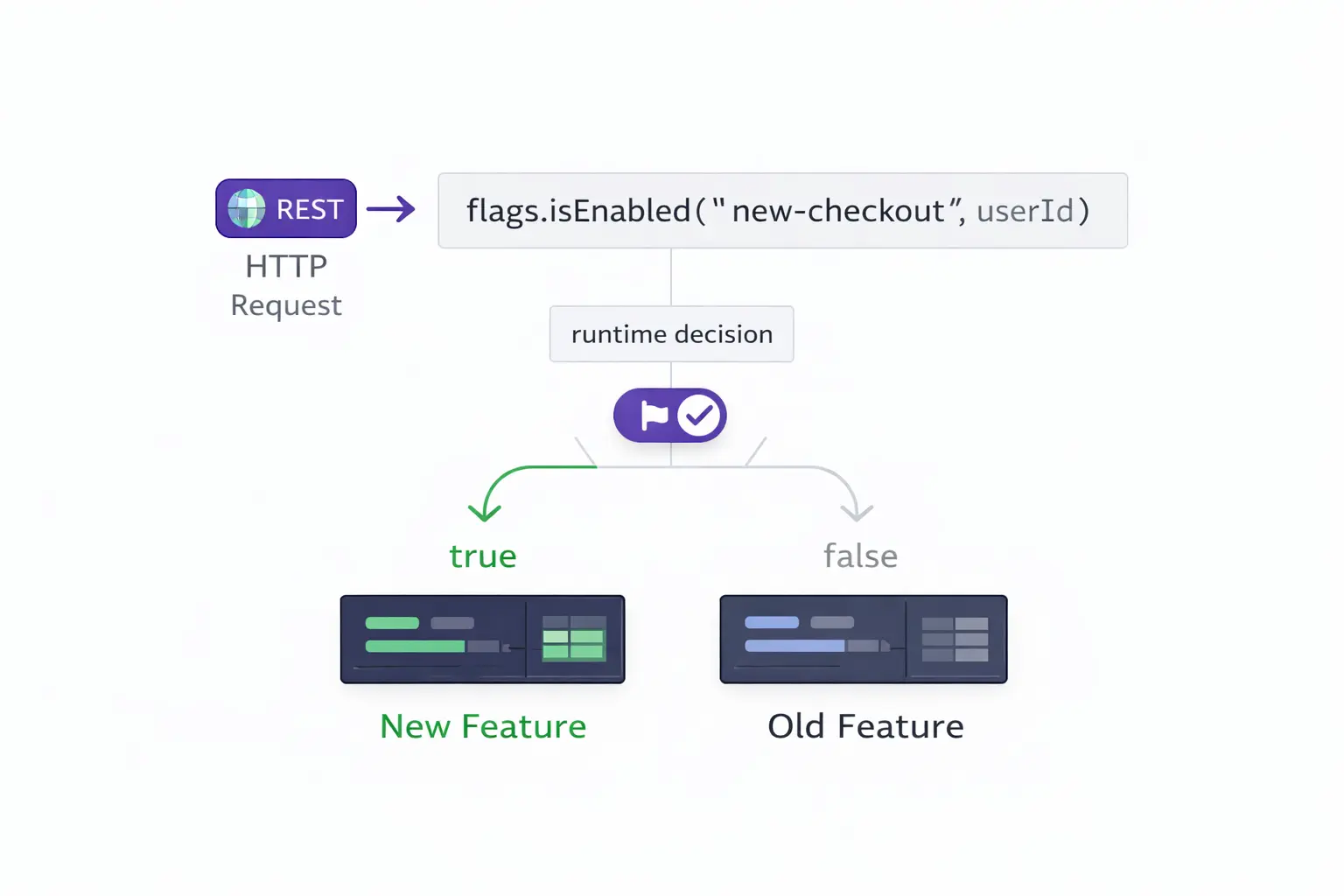
Feature flags wrap logic in conditional checks evaluated at runtime. The decision is made dynamically — not at deploy time.
if (flags.isEnabled("new-checkout", userId)) {
    return newCheckout();
} else {
    return oldCheckout();
}
How flag evaluation works
Key Capabilities
Real-World Use Case
A team ships a new checkout system. Instead of exposing it to all users:
Feature Flags vs Traditional Deployments
Incident response — with vs. without a kill switch
FAQ
What is a feature flag used for?
To safely release features without redeploying code — with runtime control over who sees what.
Do feature flags affect performance?
A well-designed system evaluates flags in sub-10ms, adding no measurable overhead to your request path.
Are feature flags safe?
Yes — they reduce risk by enabling controlled rollouts and instant rollback without a deployment.
Start Using Feature Flags
Release Anchor provides runtime feature control for backend systems — gradual rollouts, segment targeting, and instant kill switches with sub-10ms evaluation latency.
Related topics